
The Weekly Reflektion 47/2026
The major operators in the Norwegian Petroleum industry have recently undergone, or are undergoing,major organisational changes. These changes are driven by different factors, for example, change in activity levels, cost reduction, and acquisitions. The aim is a more efficient organisation that makes best use of the people at the lowest cost. Some of the changes result in new organisations and some return the organisation to a model previously used. Changing the organisation is a major project that requires an appropriate and thorough risk assessment process. Without this process there may be unintended consequences that can have a major impact on the company.
How robust will your organisation be when you change it?
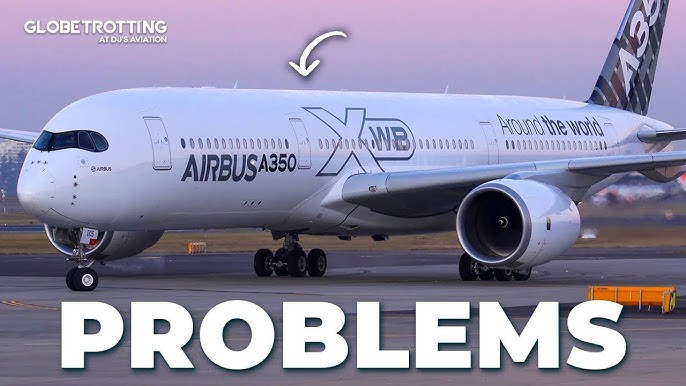
The Airbus A350 is one of the most advanced and efficient long-haul aircraft in service today. Designed to compete with Boeing’s 787 and 777, the aircraft incorporates extensive use of composite materials, advanced aerodynamics, and highly efficient engines. Despite its technical success and strong market demand, the A350 program has experienced significant delivery delays in recent years. These delays are not the result of a single failure but rather a combination of interconnected challenges that have exposed vulnerabilities within the global aerospace supply chain.
Modern aircraft manufacturing is complex. An A350 consists of millions of individual parts sourced from hundreds of suppliers located around the world. Airbus acts primarily as a systems integrator, coordinating the delivery of major structural components, engines, avionics, landing gear, cabin equipment, and thousands of smaller parts before final assembly takes place. This approach allows manufacturers to leverage specialized expertise, but it also creates significant dependencies on suppliers.
One of the most visible challenges has been disruptions in the production of major structural components. Delays in the delivery of fuselage sections and other large assemblies have created bottlenecks that affect the entire production schedule. Unlike smaller components that can sometimes be sourced from alternative suppliers, critical aerostructures are often produced by a limited number of highly specialized facilities. When these suppliers experience operational problems, workforce shortages, or ownership transitions, the impact can quickly cascade throughout the program.
The aerospace industry has also struggled with the lingering effects of the COVID-19 pandemic. During the downturn in air travel, many suppliers reduced capacity, laid off experienced workers, and postponed investments. When demand for new aircraft returned more rapidly than expected, suppliers found it difficult to rebuild their workforce and production capabilities. The loss of experienced technicians, engineers, and manufacturing specialists created skills gaps that continue to affect production rates today.
Engine availability has been another important constraint. Modern aircraft engines are among the most complex machines ever built, requiring highly specialized materials, precision manufacturing, and extensive certification processes. Any delay in engine production can prevent otherwise completed aircraft from being delivered. Because Airbus depends on a small number of engine manufacturers, shortages cannot easily be offset through alternative sourcing.
Underlying these specific challenges is a broader issue: the pursuit of efficiency has often reduced resilience. Over many years, aerospace manufacturers and suppliers adopted lean production methods designed to minimize inventory, reduce costs, and maximize productivity. While these approaches improved financial performance during stable periods, they also reduced buffers within the system. As a result, disruptions that might previously have been absorbed now have the potential to affect production schedules for months or even years.
The A350 delays illustrate how modern industrial systems can become vulnerable when complexity, specialization, and efficiency intersect. The aircraft itself remains a highly successful product, but the challenges surrounding its production highlight the importance of supply chain resilience, workforce stability, and long-term industrial capability. The lessons extend far beyond aerospace, demonstrating that in complex systems, efficiency alone is not enough. Organizations must also maintain the flexibility and robustness needed to withstand unexpected disruptions and recover quickly when they occur.