The Weekly Reflektion 43/2026
The safety systems in the petroleum industry have developed through decades of experience, unfortunately much of this experience is from Major Accidents. Hopefully the lessons learned from these Major Accidents will not be repeated. Hopefully we will not create new situations that will lead to a Major Accident. Hopefully we do not assume that hope is the only tool we have to prevent Major Accidents in the future.
How is ‘acceptable’ changing in your organisation?
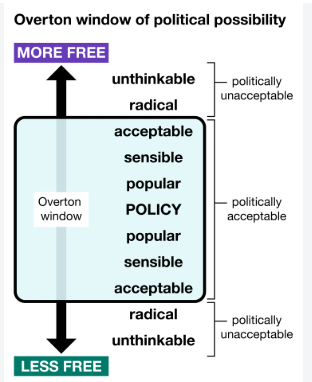
The Overton Window is a concept from politics that describes the range of ideas and behaviours considered acceptable at a particular time. The window is not fixed. It moves as attitudes and expectations change. Practices that were once considered acceptable are first questioned, then fought against and eventually considered intolerable in society. Slavery is an example that shows both how long it may take for society to change, and the price society may need to pay to make that change.
In the same way practices once considered unacceptable can gradually become tolerated, accepted and eventually regarded as normal. The danger is not simply that safety standards deteriorate, but that the industry’s perception of what constitutes acceptable behaviour gradually changes.
Many of today’s safety systems, technical standards, operating procedures and regulatory requirements were developed through decades of experience, often following serious accidents. They reflect lessons learned, sometimes at enormous human cost. But the people who developed these systems are gradually disappearing. As experienced personnel retire, organisations risk losing more than technical knowledge. They lose an understanding of why particular requirements were introduced, which assumptions underpin them, and what can happen when they are disregarded. We increasingly rely on safety systems developed by previous generations while losing the knowledge and experience that made those systems effective.
At the same time, organisational attitudes towards challenge and criticism may be changing. Major Accident prevention depends on people who question assumptions, challenge decisions and raise uncomfortable concerns. Historically, some of the most important safety improvements have resulted from individuals willing to disagree with prevailing opinions. Yet organisations can gradually develop cultures where criticism is regarded as negativity, questioning decisions as disloyalty, and challenging management as obstructive behaviour. Leaders may become less critical of the information presented to them, while employees become more reluctant to express concerns. The desire for agreement and positive reporting can replace healthy skepticism.
Behaviours that should be considered unacceptable become normal, while behaviours essential to safety become unwelcome. The process resembles what Diane Vaughan described as normalisationof deviance in her analysis of the Challenger disaster. Repeated departures from expected standards, without immediate adverse consequences, gradually become accepted. The deviation need not involve a physical barrier, operating limit or maintenance requirement. It also applies to the behaviour of the people in the organisation.
The movement of the window may lead to a management team that no longer welcomes difficult questions, an engineering organisation that values compliance with procedures more than understanding their purpose, and a workforce that increasingly avoids challenging decisions. We may end up with an industry that mistakes the absence of accidents as evidence that its safety systems remain effective.
The most dangerous movement of the Overton Window may be when questioning becomes unacceptable, while complacency becomes normal.
It is also important to consider how the increasing use of AI will influence the movement of the Overton window. Future questioning will increasingly be directed towards AI. ChatGPT, Copilot etccould become discussion partners and sources of knowledge instead of colleagues and established experts. Will these AI tools be able to replace the knowledge and experience that we are likely to lose?Does AI know enough about the background and context for the established systems before it suggests changes?