
The Weekly Reflektion 38/2026
The Norwegian Ocean Industry Authority (Havtil) organised a seminar on hydrocarbon leaks on 3rd September 2026. The focus for the seminar was operational and organisational causes of hydrocarbon leaks, and measures to help prevent such incidents. Prevention of hydrocarbon leaks is a vital factor in reducing Major Accident risk. In the discussions at the end of the seminar there was a strong reminder that corrosion arguably is the greatest uncertainty with respect to hydrocarbon leaks. And as Havtil say, the risk means the consequences of corrosion, with the associated uncertainty. And let there be no doubt that these consequences can be dire.
Do you have control of corrosion?
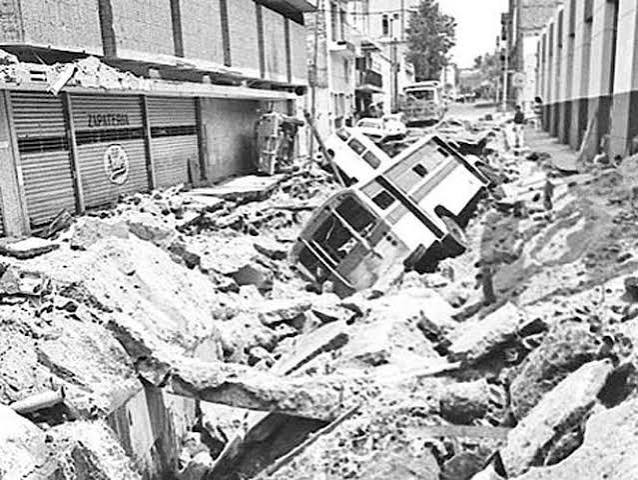
On 22 April 1992, a series of about ten explosions ripped through the sewer system beneath Guadalajara city, Mexico. Streets were torn apart, buildings collapsed and vehicles were thrown into the air. More than 200 people were killed and many hundreds injured.
The immediate cause was the accumulation and ignition of flammable hydrocarbon vapours in the sewer system. Gasoline had escaped from a pipeline due to corrosion and had migrated underground. One of the factors that influenced the corrosion wasgalvanic effects associated with nearby buried metallic infrastructure contributing to deterioration of the material. The ignition source was never conclusively identified. There were however many potential sources including dropped matches, lit cigarette ends, etc.
There were warning signals. Residents had reported strong gasoline-like smells from drains and sewers before the explosions. Some people even observed small columns of vapour or “smoke” coming from the sewers. Measurements carried out before the explosion indicated hydrocarbon levels at 100% LEL, leaving no doubt of the potential for an explosion and fire. Authorities including Pemex, SIAPA (the municipal water and sewer authority), attempted mitigating measures. Water was injected into sections of the sewer,and some manhole covers were opened, apparently with the intention of flushing and ventilating the system. But critically, the population in the subsequently devastated area was not evacuated.At the same time the authorities were reassuring residents. Newspapers reported that inspectors had examined the problem and indicated there was no danger. After the explosion, residents strongly disputed suggestions that they had been warned or told to evacuate. The subsequent federal investigation was highly critical. It concluded that some officials knew that explosive concentrations existed but failed to take appropriate action. The investigation specifically criticized Pemex personnel who had knowledge of the developing hazard and found negligent or passive responses to the information available.
Offshore installations contain large inventories of hydrocarbons at high pressures and temperatures within relatively compact areas. A corrosion-induced leak can therefore rapidly develop into a major gas release, fire or explosion. Inspection programs are essential in corrosion control, and these should be based on an understanding of credible degradation mechanisms. Internal and external corrosion, corrosion under insulation, erosion-corrosion, galvanic corrosion and environmentally assisted cracking should be considered where relevant. Inspection locations and intervals should reflect both expected degradation rates and the consequences of failure.Measurements should also be trended over time. A single wall-thickness measurement tells us the condition today; a series of measurements can tell us where the equipment is heading. This allows intervention before the safety margin is exhausted.
Most importantly, inspection findings must result in action. There is little value in identifying significant corrosion if repairs are repeatedly deferred or equipment continues operating without adequate assessment. Defined acceptance criteria, minimum allowable thicknesses, repair requirements and clear responsibilities are essential.
When it comes down to effective measures to prevent hydrocarbon leaks,‘keep it in the pipe’, is one of the most important.