
The Weekly Reflektion 35/2026
Responsibility is often a term bandied around after a Major Accident. Next of kin, victims, the authorities and the courts, among others, want to know who is responsible. Who is not the company and organisation, it is the person or persons. Responsibility is therefore personal. Responsibility is something you have and use to prevent a Major Accident. When the Major Accident occurs, then it is something you will need to take when the investigation gets under way. Unfortunately, many managers do not understand, personal responsibility and fail in their duty of care. The long trail of disasters we have left behind us is a sad reminder of this failure.
Do you take your responsibility personally?
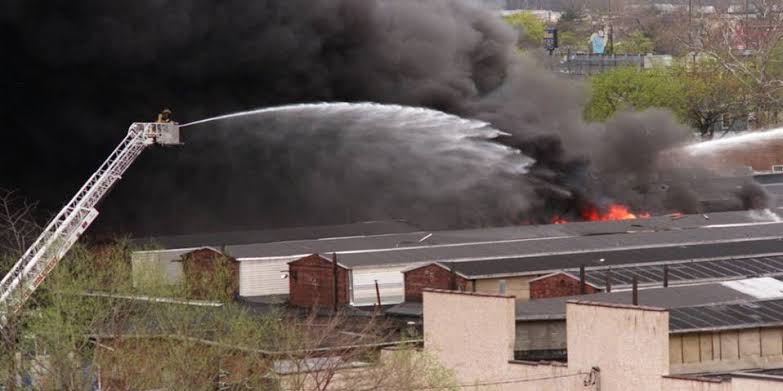
On 21 April 1995, a catastrophic explosion destroyed much of the Napp Technologies chemical plant in Lodi, New Jersey. The immediate cause involved a runaway reaction during the manufacture of a chemical product containing water-reactive materials. Napp was privately held by members of the Sackler family, better known for their ownership of Purdue Pharma. The official EPA/OSHA investigation found deficiencies extending far beyond the actions of the workers present that morning. These included inadequate process hazard analysis, operating procedures and training, unsuitable equipment, inadequate information for decision-making and weaknesses in communication and emergency preparedness.
The process itself provided numerous warnings. An operation expected to take less than an hour continued for almost 24 hours. Moisture was discovered, addition of an ingredient proved difficult, unusual odours developed and eventually the mixture began bubbling, heating and smoking. The operation had clearly departed from its intended conditions, so the plant was evacuated. After this evacuation, five employees tried to remove the reacting materialsfrom the blender and place it into drums. At approximately 07:45, the mixture violently exploded and all five died.
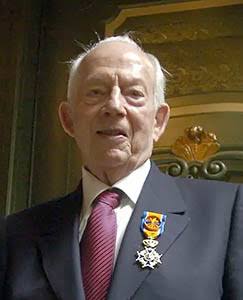
Patrick Radden Keefe, in his book Empire of Pain, recounts a revealing episode involving Raymond Sackler, one of the family members behind Napp. Several months after the explosion, Sackler was asked whether he felt any personal responsibility for the tragedy. His answer was unequivocal, “Absolutely not.”
The timing of the question was interesting as it was asked just before Raymond Sackler was awarded an honorary British knighthood for his contributions to science, the arts and astronomy.
Raymond Sackler did not personally instruct the employees to undertake the dangerous operation. There is no suggestion that he was personally involved and that he personally understood the chemical conditions inside the blender. This illustrates an important distinction in safety leadership: responsibility is not the same as blame.
Senior leaders cannot personally supervise every operation. They cannot know the position of every valve or understand every developing process abnormality. But they are responsible for ensuring that the organisation has competent people, adequate resources, appropriate equipment, effective hazard analysis, good procedures and a culture in which production is stopped when conditions become unsafe or uncertain.
The higher someone rises in an organisation, the less direct control they normally have over individual activities. Yet their influence over the conditions under which those activities are performed becomes greater. After an accident, it is tempting for senior management or owners to regard the event as something that happened several organisational levels below them. Operators made the decisions; supervisors controlled the work; engineers designed the procedures. Responsibility can therefore migrate downwards until it eventually rests with those closest to the accident. Good safety leadership requires the opposite instinct.
When five people die, the first question for senior leadership should not simply be, “Was I personally responsible?” It should be, “What was it about the organisation for which I was responsible that allowed this to happen?”
Managers can delegate work and can delegate authority. But managers cannot delegate responsibility for creating the conditions in which people work safely.