
The Weekly Reflektion 24/2026
In last week’s Reflektion, 23/2026, we highlighted the massive consequences of a breach in the Three Georges Dam on the Yangtze River in China. Thank you for the positive feedback. This week we will cover a near miss that could also have had catastrophic consequences for the world. The incident also highlights the way we handle uncertainty in managing risk over time. The longer the period since the last Major Accident, the more certain we become that the next Major Accident will not take place.
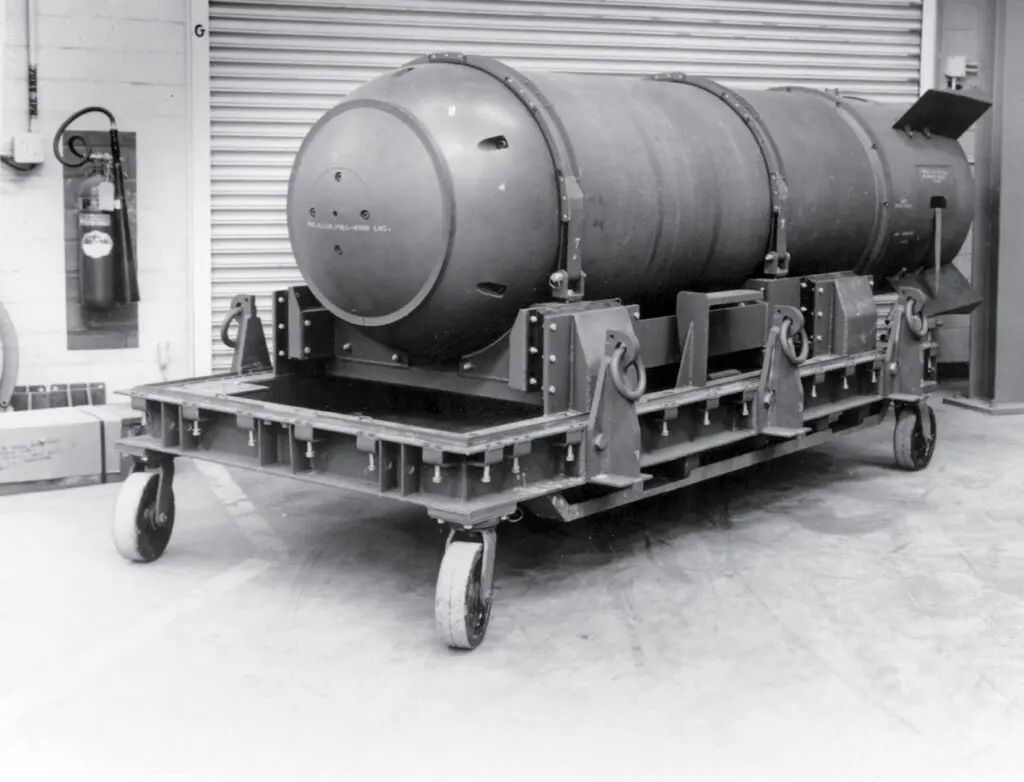
Mark 15 Thermonuclear bomb
How bad can a routine operation be?
The 1958 Tybee Island incident provides a remarkable example of how a routine operation can escalate into an event with consequences lasting generations. During a military training mission near Savannah, Georgia, a U.S. Air Force B-47 bomber carrying a Mark 15 hydrogen bomb collided with an F-86 fighter aircraft. To prevent a potentially catastrophic crash over populated areas, the bomber crew was forced to jettison the bomb into the Atlantic Ocean near Tybee Island.
The bomb, weighing approximately 7,600 pounds, was never recovered despite extensive search efforts involving both the Navy and Air Force. More than six decades later, its exact location remains unknown. It is widely believed to lie buried beneath sediment offshore from a coastline visited annually by tourists, fishermen, and local residents. While military authorities have stated that the weapon was unlikely to detonate as a nuclear explosion due to the condition of its triggering components, the possibility that radioactive materials remain in the environment continues to generate debate and concern.
The immediate accident caused no mass casualties, no visible destruction, and no dramatic images of devastation. Yet the incident illustrates a different category of risk: a hidden hazard that persists long after public attention has faded. Unlike a fire, explosion, or flood, the consequences are largely invisible. The uncertainty itself becomes part of the hazard. A lost nuclear weapon raises questions that remain difficult to answer decades later. Where exactly is it? What condition is it in? Could environmental changes expose it in the future? What would happen if it were discovered unexpectedly?
The Tybee Island incident also highlights the risks associated with operating highly hazardous systems under routine conditions. During the Cold War, nuclear weapons were regularly transported, deployed, and maintained as part of strategic deterrence. The systems were designed with multiple layers of safety, yet a simple aircraft collision created circumstances that no one intended. A sequence of individually manageable events combined to produce an outcome that remains unresolved more than sixty years later.
The broader lesson extends far beyond nuclear weapons. Modern society depends on complex systems involving hazardous materials, critical infrastructure, advanced technology, and tightly interconnected operations. Most days these systems function exactly as predicted. However, history demonstrates that rare combinations of failures can produce consequences far beyond what operators, planners, or regulators initially imagine. The absence of an immediate catastrophe should not be confused with the absence of risk.
The Tybee Island incident forces us to confront an uncomfortable reality. Some accidents do not end when the emergency response is complete. Some leave behind uncertainty, vulnerability, and unanswered questions that persist for generations. The true measure of preparedness is not simply preventing failures, but understanding the consequences when prevention fails. Hidden beneath the seabed off a popular American coastline may lie one of the most enduring reminders that even the most powerful technologies remain vulnerable to human error, unforeseen events, and the limits of our ability to control complex systems.