
The Weekly Reflektion 15/2026
Reflekt has produced several Reflektions on the ‘human factor’ and it will remain a key topic in the future. There is an increased recognition that the design and operability of complex systems need to account for the human factor and the way people are likely to respond to situations. The human factor can be both the weakest link and the greatest strength. Yes, humans are fallible, however this fallibility extends also to design and operability. When the design fails, or the situation is out with the operational boundaries then the human will be called on to respond and save the day.
Are you getting serious about the human factor?
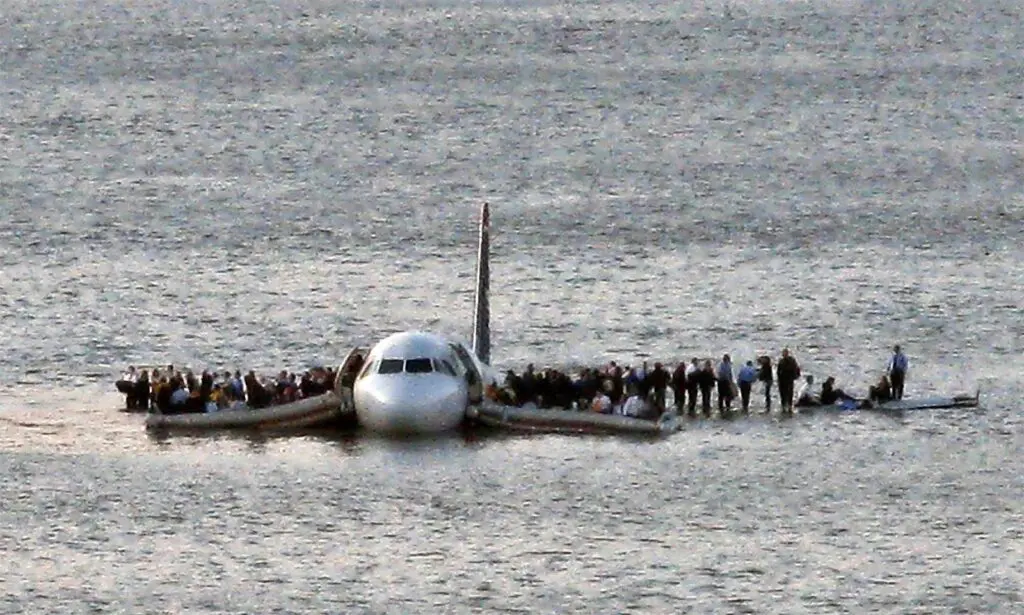
The emergency landing of US Airways Flight 1549 in the Hudson River on January 15, 2009, often called the “Miracle on the Hudson” is one of the clearest demonstrations of why the human factor must be taken seriously in high-risk systems. While technology, procedures, and engineering all played important roles, it was ultimately human judgment, coordination, and leadership that determined the outcome.
Shortly after takeoff from LaGuardia Airport, the aircraft struck a flock of Canada geese, causing both engines to fail almost simultaneously. With only minutes to act and limited altitude, Captain Chesley “Sully” Sullenberger and First Officer Jeffrey Skiles faced an extreme, time-critical situation. Attempts to restart the engines failed and left insufficient time to return to any airport. The captain made the decision to ditch the aircraft in the Hudson River, a highly risky but ultimately life-saving choice.
This decision highlights a core aspect of the human factor: situational awareness and judgment under pressure. Although procedures and simulations exist, no checklist can fully replicate the complexity and urgency of real-life emergencies. Crew resource management (CRM) the ability of the crew to function as a coordinated team was critical. While the captain focused on flying the aircraft, the first officer worked through emergency checklists and attempted engine restarts. Meanwhile, the cabin crew prepared passengers for impact and managed the evacuation. This division of roles, rooted in training, ensured that no time was wasted, and no critical task was neglected.
Communication also played a decisive role. The captain’s calm announcement “Brace for impact”, gave passengers clear, actionable instruction. At the same time, air traffic controllers coordinated emergency responses and offered alternatives, demonstrating that the human factor extends beyond the cockpit to the entire system. Effective communication reduced panic, aligned actions, and enabled a rapid rescue response once the aircraft was on the water.
The incident underscores that training alone is not enough, how humans apply training matters. Aviation training emphasizes principles such as “aviate, navigate, communicate,” but their successful application depends on experience, mental resilience, and the ability to manage stress and workload. The investigators noted that the crew operated under intense pressure and high workload, conditions that can easily degrade performance if not managed effectively.
Investigations later confirmed that ditching in the Hudson provided the highest probability of survival, validating the captain’s rapid assessment and decision-making. For anyone that has seen the film ‘Sully’ then there is a scene when the captain is presented with the results of flight simulations that indicated the aircraft could have landed safely at LaGuardia by returning immediately after the bird strike. After seeing the simulation, Tom Hanks, who played the captain in the film, responded, ‘Can we get serious now?’. He follows up with ‘You have still not taken account of the human factor’. In the discussion it was revealed that the pilots on the simulation knew exactly what was going to happen, had preplanned their response, and required 16 attempts to get it right. Hardly a realistic situation. This is undoubtably a dramatization of the investigation, however it is a valuable lesson for any investigator trying to understand the incident.