
The Weekly Reflektion 04/2026
One of the most perceptive observations in improving safety and in prevention of Major Accidents is that it involves people. To influence people, you need to understand what makes them tick and what may get in the way of the improvements you want to make. ‘Ego’ can be described as a person’s sense of self-esteem or self-importance. However sensible, logical and reasonable the measures in place to ensure a safe and effective operation, these will be undermined if you get on the wrong side of ‘ego’. We really should know this with the many thousand years’ experience we have. Somethings take time to sink in.
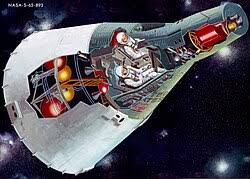

How does ego affect your operation?
One of the more awkward chapters in spaceflight history was the problems with human waste. Several early space programs struggled badly with urine-collection system leaks, but the most famous incidents happened during NASA’s Gemini program (1965–1966).
Gemini astronauts used a Urine Collection Device (UCD), a pressure-sealed waste-management system designed to function in zero-gravity. The system relied on an external sheath fitted to the user and connected to a container, and a tube leading to a bag that could be dumped overboard. Three sizes were provided to ensure a proper seal, small, medium, and large. Astronauts were supposed to be carefully sized before flight. In practice, egos and embarrassment interfered. Many astronauts chose medium when they should have used large. Too-tight sheaths caused poor sealing, partial detachment (of the sheath), leakage and sometimes extremely painful constriction.
On Gemini 7 (Frank Borman and Jim Lovell) the UCD failed so badly that urine leaked into the cabin. It soaked flight suits and pooled in zero-gravity. The smell became overpowering and the astronauts were stuck for 14 days in a spacecraft the size of a closet. Borman later said it was one of the most miserable parts of the mission.
On Gemini 8 (Neil Armstrong and Dave Scott), Armstrong’s UCD leaked badly. Urine floated into electrical panels and created a serious short-circuit risk. The mission had to be aborted early.
The experience of one of the Gemini commanders illustrates the ‘ego’ factor, but perhaps not quite the way one would expect. Daniel Halvorsen had completed more than three thousand flight hours in experimental aircraft and had participated in two orbital simulation programs. His training record was exemplary. Yet, during final personal-equipment verification, a minor decision was made that would later compromise operational safety. Medical staff had conducted preliminary sizing of the UCD, but final selection remained the responsibility of each crew member. When prompted to confirm his size, Commander Halvorsen selected the medium sheath, despite measurements indicating that a larger size would provide a more reliable seal. The decision was influenced not by technical reasoning but by personal discomfort and perceived social stigma. The choice was recorded, and the mission proceeded. During the second day in orbit, environmental sensors detected elevated humidity levels near the forward avionics bay. At first, the readings were attributed to routine condensation. However, within minutes, floating liquid droplets were visually observed drifting toward exposed electrical connectors. Chemical analysis confirmed the presence of biological waste. The leakage originated from Commander Halvorsen’s UCD, which had partially detached due to improper sizing.
NASA learned the hard way that human waste management is as critical as rocket engines. They redesigned the system for Apollo with better adhesives, more accurate sizing and improved tubing and venting. There was also a backup of in-suit absorbent garments (early space nappies). These were far more reliable, though astronauts still joked about them constantly.