The Weekly Reflektion 01/2026
Tripartite cooperation in the Norwegian petroleum industry is one of the foundations for health safety and working environment. The basis for this cooperation is a basic understanding of the need to involve the workforce in the production process. The success of thiscooperation is dependent on a continuous development of the relationships between the companies, the unions and the authorities,and a response to external factors, for example the use of Artificial Intelligence. This means that all the parties need to adapt to succeed.
How will AI affect tripartite cooperation?
The relationship between labour and production has developed significantly since the onset of the industrial revolution. Adam Smith viewed labour primarily as a factor of production. In The Wealth of Nations, he emphasised the efficiency gains of the division of labour, where productivity increases as tasks are broken into smaller, specialized operations. While Smith recognised that repetitive work could dull the mind, the worker’s main role remained to serve production efficiency. This influenced early industrial organisation and is reflected in tightly standardised procedures and role specialisation.
As capitalism developed, its darker side was revealed. The exploitation of workers, where value created by labour exceeds the wages paid. The drive for success was therefore to produce more and pay less. There were long shifts, hazardous conditions, and the workers had limited influence over work. Many workers and their families were dependent on their employer for both work and shelter. In extreme examples of exploitation, workers’ families were thrown out of their homes after a worker was the victim of a fatal accident enhancing the tragedy. The fight for worker rights and the organizing of the workforce has been the key contributor in fighting this exploitation.
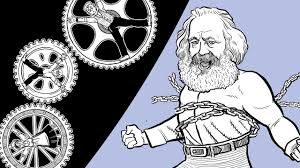
Karl Marx argued that under capitalism, workers become alienated from the product of their labour, the labour process, their co-workers, and their own human potential. Labour becomes something performed out of necessity rather than meaning. Marx advocated that through participation, collective organisation, and attention to worker well-being, companies could reduce alienation and improve motivation and operational performance. Marx’s insights remain highly relevant to understanding how effective and sustainable work is organised. This is also a key factor in the benefits of the tripartite cooperation in the Norwegian petroleum industry.
In April 2025, the Norwegian government initiated a tripartite working group to consider the risks associated with the offshore petroleum industry, offshore wind, transport and storage of CO2,and harvesting of minerals from the seabed. Their recommendations will be an input to the next White Paper on HSE in the offshore industry. It will be interesting to see if the tripartite spirit is lived up to, or whether the participants will pursue their own agendas.
The emerging use of AI, automation, and remote operations offshore reintroduces a critical question: will technology further alienate workers, or enable safer and more meaningful labour? If AI is used purely to intensify surveillance and productivity, Smith’s logic of efficiency risks deepening Marx’s alienation. However, if AI is designed to support human judgment, reduce dangerous exposure, and expand worker autonomy, it can represent an important step forward in both safety, efficiency and worker motivation.
The Norwegian model suggests the direction forward, human-centred automation, democratic participation in technology design, and shared ownership of technological gains. In the age of AI, safety, dignity, and productivity must be treated not as competing goals, but as inseparable conditions for sustainable offshore work.
Happy New Year and all the best for 2026