
The Weekly Reflektion 37/2026
When Reflekt carry out investigations we always try to understandthe safety culture, for example the ‘stop the job’ principle and how it is practised. The key factors are how the supervisors respond, and how the management encourage the organisation to actually stop the job if there are concerns and uncertainties. It often doesn’t take too long to get an impression of whether the talk is being walked.
When someone speaks up, do you listen and respond?
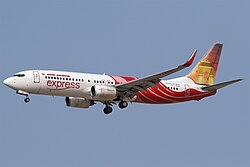
On 7 August 2020, Air India Express Flight 1344, a Boeing 737-800 flying from Dubai to Kozhikode in India, attempted to land in heavy rain. The aircraft touched down halfway along the runway, overran the end and crashed into the valley below. Twenty-one people, including both pilots, were killed.
The approach was unstable and the Captain was flying, and the First Officer was monitoring the instruments. Just before touchdown, the First Officer recognized that the landing was becoming unsafe and called for a go-around. The Captain ignored the call and continued the landing.
Air India Express procedures authorized and required the First Officer to take control and initiate the go-around when the Captainfailed to respond appropriately. It would be easy to regard this simply as an error by the First Officer. The investigation reached a much more important conclusion. It identified a steep authority gradient within Air India Express. Junior pilots could be reluctant to challenge senior pilots, while senior pilots could make decisions without adequately consulting their colleagues. The investigators concluded that poor Crew Resource Management was a major contributory factor in the accident. They specifically identified the airline’s work culture and deficiencies in CRM training as factors that prevented the First Officer from being sufficiently assertive.
Organizations frequently tell employees that they have both the right and the responsibility to speak up when something appears unsafe. Stop-work policies, intervention cards and safety observations are common. But issuing a procedure saying “Stop the Job” does not by itself create a culture in which people feel able to do it.
Employees must have the confidence to raise concerns, challenge decisions and, where necessary, stop an operation. But managers and supervisors must demonstrate that they want to hear those challenges. If experience teaches people that questioning a senior person results in irritation, embarrassment, ridicule or damage to their career, the formal authority to intervene becomes almost meaningless. People rapidly learn the difference between what an organization says and what it rewards.
The Air India Express investigation is particularly significant because it did not stop at the cockpit. It identified weaknesses in management supervision of training, operations and safety practices. Previous recommendations concerning CRM and cockpit authority gradients were not effectively implemented. Luckily in this investigation the focus changed from individual behaviour to organizational responsibility. Remember that this is not always the case.
A strong safety culture therefore requires more than encouraging people to speak. Leaders need to actively create opportunities for challenge, listen when concerns are raised and visibly respond to them. A supervisor should regard a challenge not as an attack on authority but as another barrier preventing an error from becoming an accident.
Flight 1344 demonstrates that a safety system fails if the person who sees the danger cannot effectively challenge the decision, and it fails just as seriously when the person with authority is unwilling to listen.