
The Weekly Reflektion 33/2026
The South African golfer Gary Player was practising bunker shots before a tournament in Texas. He holed one shot and a spectator bet him that he could not do that again. Player took the bet and holed the shot, then another. The spectator exclaimed, ‘I’ve never seen anyone so lucky’. Player replied, ‘Well the harder I practice, the luckier I get’. Sometimes there really is luck involved and a sequence of unlikely events can result in significant success and fortune. On the other hand, if you are relying on luck to ensure safety, you need to be lucky all the time.
Are you relying on luck to prevent a Major Accident?
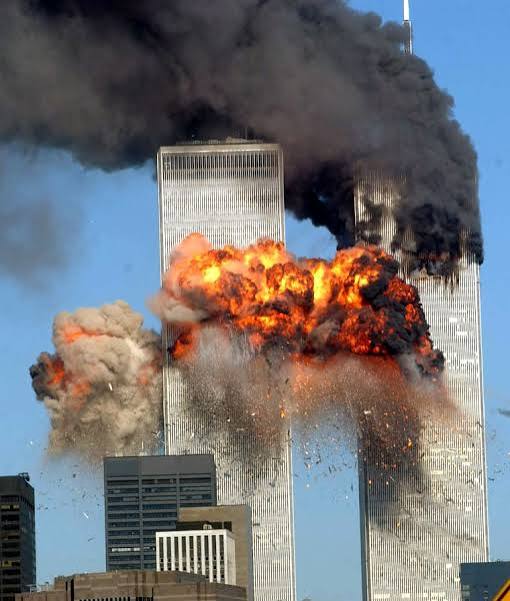
Larry Silverstein’s experience surrounding the World Trade Center has often been told as an extraordinary story of fortune. In July 2001, he signed a 99-year lease on the Twin Towers, one of the world’s most recognizable properties. Only weeks later, the buildings were destroyed in the terrorist attacks of 11 September.
The World Trade Center presented significant commercial challenges. Among them was the presence of asbestos in parts of the buildings, a legacy of construction practices from an earlier era. Managing that issue would have required enormous investment over time. Silverstein also ensured that the property carried extensive insurance, including cover for terrorism, an understandable precaution given that the complex had already suffered a terrorist bombing in 1993. The insurance value he required was significantly higher than the actual value of the buildings themselves.
On the morning of 11 September, Silverstein was not in his office in the Twin Towers as he usually would have been. He had not missed a day at work for years. His wife persuaded him to attend a medical appointment instead. That simple decision almost certainly saved his life.
Following years of legal disputes over the insurance policy, a settlement of approximately US$4.55 billion was eventually reached. The money was used to meet financial obligations and help fund reconstruction. From a business perspective, the outcome was ultimately manageable despite the unimaginable tragedy.
It is tempting to view this as a story of extraordinary luck. In many respects, it is. But that is precisely why it contains an important lesson for anyone involved in safety. Safety cannot rely on luck.
Sometimes people avoid disaster simply because they are delayed in traffic. Sometimes a piece of equipment fails after a shift has endedand people were no longer on site Sometimes a routine inspection discovers a defect hours before it would have caused a catastrophic accident. The danger is that surviving a near miss can quietly reinforce the belief that things will somehow work out next time.
History repeatedly shows otherwise. Many Major Accidents occur when organisations become comfortable depending on favourable circumstances instead of robust barriers. When hazards are known but tolerated, when warning signs are normalised, or when risks are accepted because “nothing has happened before”, luck gradually becomes an integral part of the safety management system.
Good safety management assumes that luck will eventually run out. It identifies hazards before they lead to disaster, builds multiple independent barriers, plans for unlikely events, and learns from near misses rather than celebrating fortunate escapes.
Larry Silverstein’s story reminds us that chance sometimes intervenes in remarkable ways. His doctor’s appointment saved his life. Insurance helped enable rebuilding after an unprecedented disaster. In safety, success should never depend on being the luckiest person in the room. It should depend on creating systems that protect people even when luck is nowhere to be found.