
The Weekly Reflektion 29/2026
Reflekt has led and participated in many investigations. We start our work with the basic assumption that people want to do a good job, and that their actions and decisions were rational in the moment they were taken. The benefit that hindsight gives us to understand these actions and decisions is the essence of investigations. Sometimes individuals realise that their actions in the lead up to the incident were questionable or even directly wrong. In this case it helps when the people speak up and lay their cards on the table. Our continuing task is to ensure the culture for openness and honesty is maintained.
Do you admit to mistakes if you have made them?
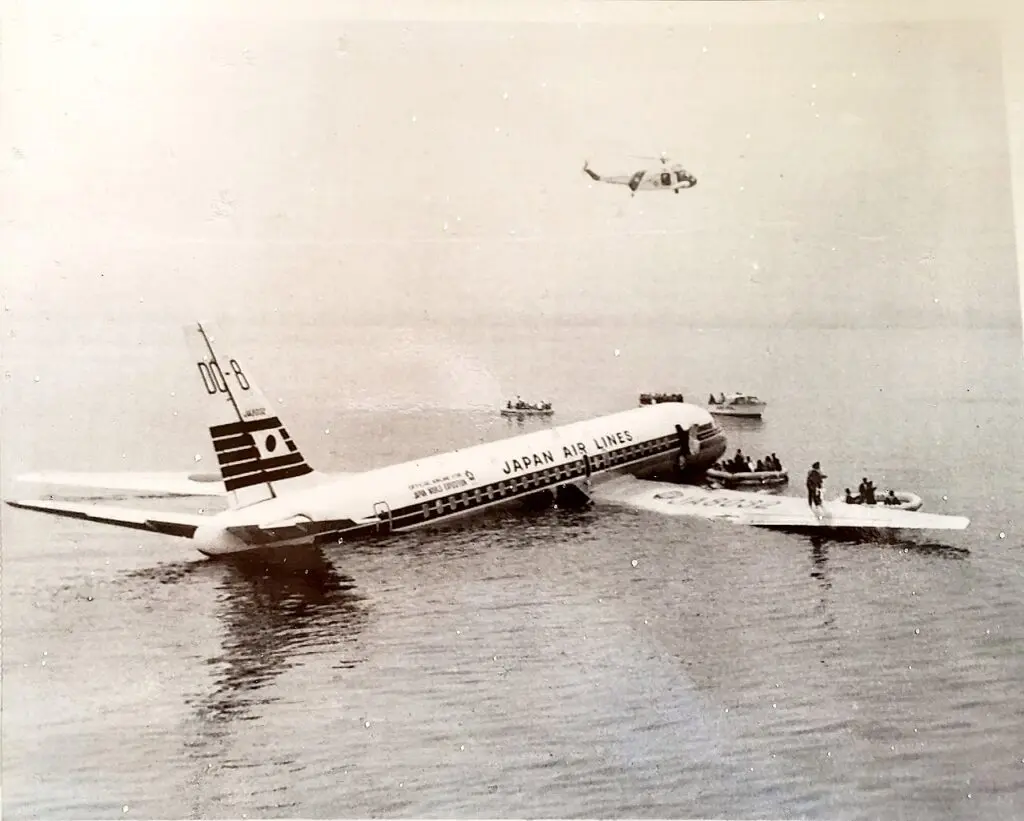
On November 22, 1968, Japan Air Lines Flight 2, a Douglas DC-8-62, crashed into San Francisco Bay on its approach to San Francisco International Airport. The crash was due to the captain’s misinterpretation of flight instruments while conducting an approach in heavy fog. Reduced external visibility increased reliance on cockpit instruments, and incorrect interpretation of altitude and position information caused the aircraft to descend below the intended flight path. All 107 people on board survived the accident without any injuries. Despite the abrupt ditching, and being immersed in saltwater, the aircraft was recovered, then repaired, and returned to service. Captain Kohei Asoh was questioned about the reasons behind the crash and his iconic answer, ‘Asoh fucked up’, became a management anecdote known as the ‘Asoh defence’.
Effective investigations provide organizations with opportunities to learn from failure. By collecting evidence, interviewing witnesses, examining equipment, and analyzing procedures, investigators can identify both the direct causes of an accident and the deeper systemic issues, or root causes, that contributed to it. These underlying factors may include inadequate training, poor communication, ineffective risk management, flawed equipment design, or organizational pressures that encouraged unsafe decisions. Addressing only the immediate cause often leaves the underlying hazards unchanged, allowing similar accidents to occur again.
A strong safety culture recognizes that learning depends upon openness and honesty. Individuals involved in an incident must feel able to provide accurate information without fear that every mistake will automatically result in punishment. This does not eliminate personal accountability; rather, it encourages truthful reporting so that investigators can understand the complete sequence of events. Reliable information is the foundation of meaningful safety improvements. The significance of Captain Asoh’s response lies not in its wording but in its demonstration of personal accountability. By accepting responsibility instead of making excuses or attempting to shift blame, the focus could move from defending reputations to understanding what had actually happened.
The Asoh defense illustrates an important aspect of assimilating information during an investigation. Learning begins with accepting reality as it is, even when the facts are uncomfortable. If individuals or organizations spend their efforts denying mistakes or protecting their image, valuable evidence may be ignored or distorted. Honest acknowledgment creates an environment in which investigators can examine human actions alongside the technical and organizational conditions that influenced them. This leads to more effective recommendations and stronger preventive measures.
The aviation industry demonstrates the value of this approach. Accident investigations conducted by independent authorities have contributed significantly to improvements in aircraft design, pilot training, maintenance practices, air traffic management, and safety regulations. Lessons learned from one accident are shared throughout the industry, reducing the likelihood that similar events will occur elsewhere. Many other high-risk industries, including healthcare, nuclear power, rail transport, and chemical processing, have adopted similar investigative principles.
Ultimately, the success of an investigation should not be measured by how much blame it assigns, but by how much knowledge it generates. Every investigation represents an opportunity to strengthen systems, improve decision-making, and protect lives. Organizations that embrace honest reporting, objective analysis, and continuous learning are better equipped to prevent major accidents and build a lasting culture of safety.