
The Weekly Reflektion 28/2026
Safety culture refers to the shared values, attitudes, beliefs, and behaviours within an organization that determine how safety is prioritized, valued, and managed. One of the challenges is the management belief that planting the seeds will be enough to ensure that they will grow and develop as planned. There is often a failure to ensure the environment can sustain the safety culture that the management expects.
How do you get a safety culture to grow?
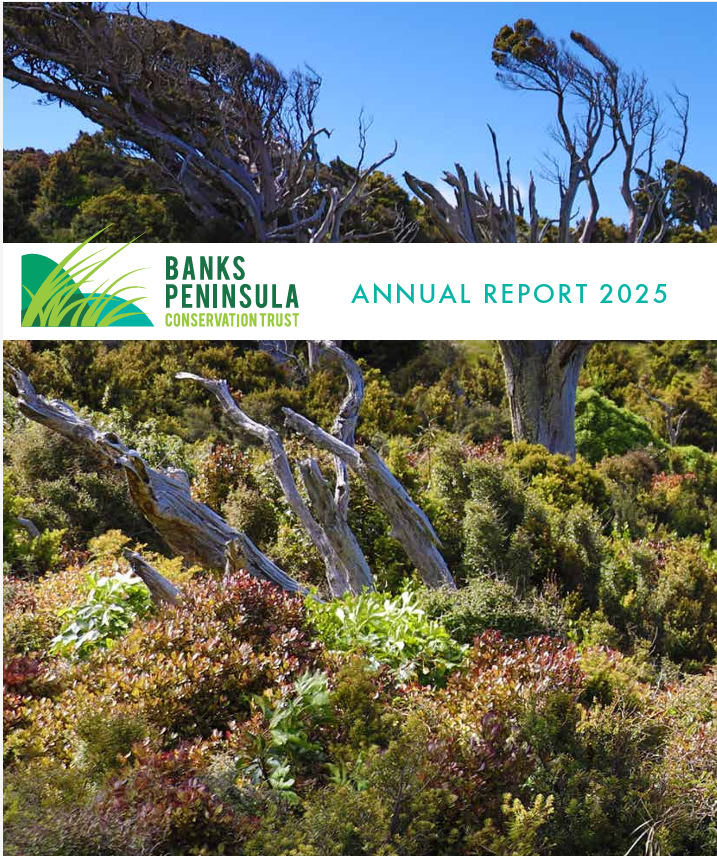
The Banks Peninsula Conservation Trust (BPCT) in New Zealand was formed in 2001. It is a non-profit charitable organisation that works with landowners, agencies, Runanga (tribal council), sponsors, and the wider community to promote the conservation and enhancement of indigenous biodiversity and sustainable land management on Banks Peninsula. The restoration of native forest on Banks Peninsula offers a useful lesson for any company trying to build a strong safety culture.
The key insight was recognizing that getting trees to grow does not necessarily mean planting trees. Often, the more important task is to create the conditions in which trees can survive, spread and eventually thrive. On Banks Peninsula, degraded farmland did not recover because the native trees were individually planted. Recovery happened because the pressures that prevented regeneration were removed. Grazing was stopped, burning was controlled, pests were managed and existing native seed sources were protected. Common gorse, originally introduced by European settlers as a windbreak plant, and considered an invasive agricultural weed, was allowed to act as a nurse canopy, sheltering young native seedlings until they grew above it. The gorse is a member of the legume family and fixes nitrogen in the soil fertilizing the depleted land.
Many organisations try to “plant” safety by launching campaigns, issuing slogans, writing new procedures or delivering one-off training sessions. These actions may have value, but they are not enough. A healthy safety culture cannot simply be installed. It has togrow. And for it to grow, leaders must create the right conditions.
That means removing the pressures that stop safe behaviour. If production targets quietly matter more than safe work, people will learn that speed is rewarded and caution is punished. If workers are blamed for mistakes, near misses will stay hidden. If supervisors say “safety first” but ignore shortcuts when deadlines are tight, the real culture becomes clear.
Creating the right conditions means making it safe to speak up, rewarding learning rather than concealment, giving people time to do work properly, and ensuring leaders respond constructively when bad news is raised. It also means recognising that informal practices can sometimes support safety, just as gorse supported forest recovery. Not every local workaround is a problem to eliminate. Some are signs that workers are adapting intelligently to real conditions. The task is to understand them, learn from them and improve the system.
A good safety culture grows when people believe that safety is not a slogan but a real priority, when supervisors listen, when hazards are fixed, and when near misses are treated as gifts of information. It grows when teams have enough resources, competence and authority to stop work when something is not right.
The lesson from Banks Peninsula is encouraging. Nature often has more capacity to recover than we assume, provided we stop damaging it and support the conditions for regeneration. Organisations are similar. Most people already want to do good, safe work. The role of leadership is not to force safety into existence through posters and instructions alone. It is to remove the obstacles, protect the early signs of positive behaviour, and create an environment where safe practice can take root, spread and become self-sustaining.