The Weekly Reflektion 27/2026
Most industries are dependent on continuous improvement to compete and to improve safety. Innovation is a key factor, and research plays an important role in the development of new ideas. This development is dependent on rigorous methods for carrying out the research and for the quality control of the method and process. Unfortunately, the motives associated with commercial success and professional recognition can lead to fraudulent results that in turn can lead to unacceptable risks.
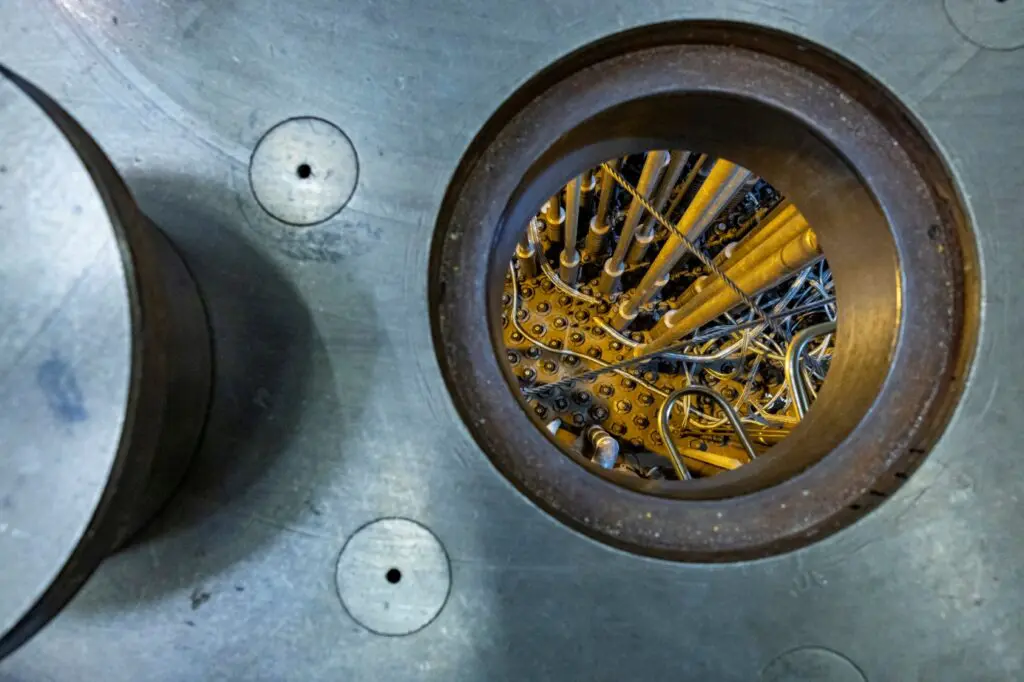
Halden reactor November 2023 – NND/IFE
How could fraudulent research affect your operation?
The Halden reactor research scandal is important because it concerns not only research integrity, but also the prevention of major accidents in high-hazard industries. The Halden reactor in Norway was used for decades to test nuclear fuel and materials under conditions relevant to power generation reactors. Such experiments can influence design choices, fuel qualification, operating limits, safety analyses and regulatory confidence in nuclear facilities.
The misconduct involved manipulation of data and test configurations in several research projects. According to Institutt for energiteknikk (IFE) and The Norwegian Radiation and Nuclear Safety Authority (DSA), the irregularities did not concern the OECD Halden Reactor Project as a whole, but they did affect specific customer projects. The key safety issue is that nuclear operators and vendors may have relied on experimental results that did not accurately describe how fuel or materials behaved under irradiation, heat, pressure or other reactor-relevant conditions. In the Halden case it is important to note that the irregularities were first revealed by a research worker at Halden, and IFE themselves reported these to the Norwegian authorities.
In major accident prevention, this matters because safety margins are built from layers of evidence. A nuclear plant does not rely on one experiment alone, but experimental data can support models used to predict fuel failure, cladding degradation, corrosion, swelling, cracking, burn-up limits, or behaviour during abnormal transients. If data are falsified or test conditions are changed without disclosure, the resulting knowledge can give a false impression that systems and components are more robust than they actually are.
Potential consequences could include overly optimistic operating limits, incorrect assumptions in safety cases, weakened regulatory review, or delayed detection of vulnerabilities in fuel and materials. In the worst case, bad data could contribute to decisions that reduce real safety margins: for example, allowing fuel to remain longer in the core, accepting a material as qualified for harsher conditions than it has truly survived, or underestimating the likelihood of cladding failure during overheating or power changes. These are not automatic accident causes, but they can erode the “defence in depth” philosophy that nuclear safety depends on.
The scandal also illustrates an organisational accident mechanism. Major accidents often begin long before the physical event, through normalization of deviance, weak quality assurance, fear-based leadership, poor challenge culture and inadequate independent verification. If staff feel pressure to deliver successful results, and if deviations are hidden rather than reported, the organisation loses its ability to learn. In a nuclear context, this is especially serious because trust in data, traceability and conservative decision-making are central safety barriers.
A practical prevention lesson is that research used in safety-critical decisions must be governed like safety-critical work. That means full traceability of raw data, independent review of test configurations, protection for whistleblowers, auditability for customers and regulators, and clear separation between commercial delivery pressure and scientific judgement. The Halden case shows that research misconduct can become a major accident precursor when it contaminates the knowledge base used to justify safe operation.