
The Weekly Reflektion 21/2026
It is not always easy to predict future incidents that will threaten the integrity of the installations that we build and install. Nassim Nicholas Taleb used these incidents as the basis for his book, ‘The Black Swan’, a subject we have covered in previously Reflektions. While Taleb emphasised that ‘Black Swan’ events by definition cannot be predicted, he did not advocate crossing of fingers and hoping for the best. Companies need to focus on robust and reliable systems and a resilient organisation in order to prepare for the unpredictable.
Are you creating robust and resilient systems?
The terrorist attack on the Twin Towers in New York 11th September 2001 was a shocking event with tragic consequences. This was not the only incident where an aircraft crashed into a skyscraper in New York resulting in a serious fire.
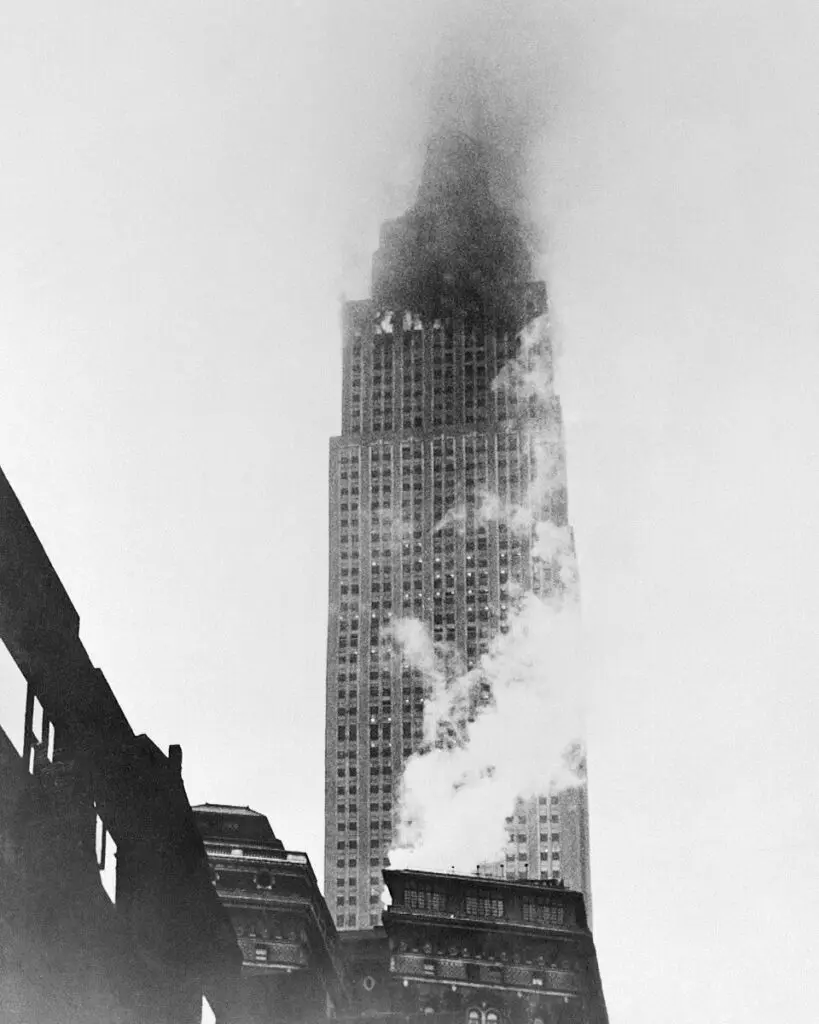
On July 28, 1945, a U.S. Army Air Forces B-25 Mitchell bomber crashed into the Empire State Building in New York City. The twin-engine bomber, piloted by Lieutenant Colonel William Franklin Smith Jr., was flying from Bedford Army Airfield in Massachusetts to Newark Airport in New Jersey. The flying conditions were not good with dense fog and poor visibility. Despite being advised to land due to dangerous weather, Smith continued toward Manhattan. Disoriented in heavy fog, he descended too low over the city and at approximately 9:40 a.m. struck the north side of the Empire State Building between the 78th and 80th floors.
The crash killed all three men aboard the aircraft and 11 people inside the building. 24 others were injured. One engine tore through the building and fell onto a nearby rooftop, while another plunged down an elevator shaft, causing fires and serious internal damage. A particularly remarkable survival story emerged from elevator operator Betty Lou Oliver, who survived a 75-floor elevator fall after the crash severed the cables, an event often cited as one of the longest survived elevator plunges in history. The elevator emergency braking system functioned as designed,
The impact caused significant destruction, including fires that spread across several floors, although serious escalation was prevented by the fire compartmentalisation strategy that functioned as intended. The Empire State Building’s steel-frame design prevented structural collapse. Firefighters contained the blaze in roughly 40 minutes, demonstrating the effectiveness of New York City’s emergency response systems. The building itself reopened many offices within days, becoming a symbol of structural resilience and robust engineering. This incident later became an important case study in skyscraper safety, fireproofing, and emergency planning.
From an aviation safety perspective, the crash highlighted the dangers of flying in poor weather, especially before modern radar, GPS, terrain awareness systems, and advanced air traffic control. It underscored the consequences of spatial disorientation, pilot decision-making errors, and inadequate urban flight safeguards. The event contributed to stronger regulations surrounding instrument flight rules and urban airspace management.
Legally, the tragedy also played a role in shaping public policy. It became one of the early major incidents connected to the Federal Tort Claims Act of 1946, which allowed citizens to sue the U.S. government for negligence under certain circumstances.
The 1945 B-25 crash remains a powerful reminder that safety depends not only on avoiding failure, but on designing systems capable of surviving a Major Accident. The crash demonstrated thatrobust engineering, redundancy, and preparedness can dramatically reduce loss of life.