
The Weekly Reflektion 10/2026
When everything looks normal, things might be going well. When a culture of questioning and challenge is in place, weak signals that things are not quite right may be better identified.
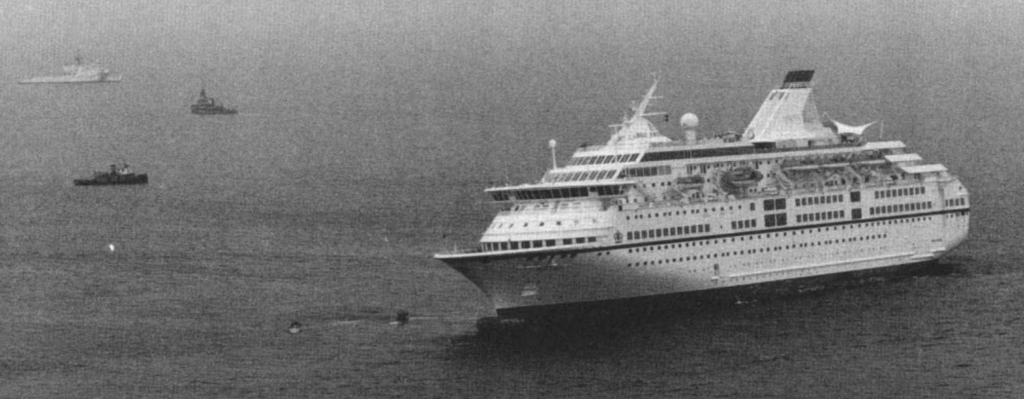
Just because it seems normal, is it OK?
In June 1995, the cruise ship Royal Majesty ran aground on Rose and Crown Shoal near Nantucket, Massachusetts with 1,509 people onboard. Fortunately, no one died, but the ship sustained major damage. The ship had been slowly drifting off course for more than a day. The navigation equipment was sophisticated and the crew was experienced. There was no storm, no concern, and no obvious emergency. Yet the ship was no longer where the crew believed it was.
A cable had become disconnected, and the navigation system quietly switched to a backup mode. A warning indicator was present, but it was subtle, and it was missed. The crew continued operating, confident in the information they were seeing. No one clearly recognized or communicated that the ship’s actual position was no longer being confirmed by satellite data. The vessel gradually moved away from its intended track until it ran aground.What makes this incident important is not the technology or the specific technical fault. It is how normal everything appeared while risk was quietly increasing.
This is highly relevant to our operations today. We often operate in environments where most days are routine. Equipment runs as intended, people perform familiar tasks and systems provide information. Nothing appears obviously wrong. It is during these normal conditions that the greatest vulnerability can develop, not because people are careless, but because people are human.
One of the most significant risks in operational environments is the assumption that “everything is fine” because nothing has clearly indicated otherwise. We often rely on multiple sources of information, reports, system displays, verbal updates, and our own observations. However, information alone does not guarantee understanding. Information must be questioned, confirmed, and shared clearly.
We play a critical role in setting the tone for this verification. When the right questions are asked, such as “How do we know this is correct?” or “What has changed since the last shift?” they encourage active thinking rather than passive acceptance. These questions are not signs of distrust. They are signs of professional awareness.
Another important lesson is that signals can easily be overlooked. People naturally focus on what demands immediate attention. Subtle warnings, gradual changes, or unclear indicators may not create urgency. Yet many incidents begin with weak signals that were visible but not fully understood or communicated.
We must help protect operations by creating an environment where uncertainty can be spoken aloud. When team members feel comfortable saying, “I’m not sure about this,” or “I don’t think this is right,” risk can be identified early. When uncertainty remains unspoken, risk can grow unnoticed.
It is also important to recognize that experience can sometimes increase vulnerability. Experienced personnel are familiar with systems and processes. Familiarity builds confidence, which is necessary for efficient operations. However, familiarity can also lead to reduced questioning. When something has worked well many times before, it is natural to expect it will continue to work well. We must help to create a culture which balances confidence with curiosity, and acceptance that verification is not a sign of inexperience, but a sign of professionalism.
Operational safety rarely depends on a single decision. It develops from many small actions, conversations, and assumptions over time. We can influence these daily patterns. By encouraging clear communication, welcoming questions, verifying assumptions, and remaining attentive to weak signals, we can help ensure that operations remain aligned with reality, not just with expectation.
The most effective leaders understand that safety is not only about responding to obvious problems. It is about maintaining awareness when everything appears normal. It is often during normal operations that unnoticed drift can begin.