
The Weekly Reflektion 09/2026
Confirmation bias is the cognitive tendency to search for, interpret, favour, and recall information that confirms one’s pre-existing beliefs or hypotheses. This bias leads to ignoring or devaluing contradictory evidence, creating skewed, subjective, and often inaccurate views of reality. It is a pervasive, often unintentional mental shortcut that reinforces existing beliefs, prejudices, and stereotypes.
Confirmation bias is out there, what are you going to do about it?
Confirmation bias is a factor in the understanding of the causes of Major Accidents, and Reflekt has covered some of these in our Reflektion, including the Helge Ingstad collision 8th November 2018. Confirmation bias has also influenced the investigation of Major Accidents and has led to serious miscarriages of justice and failure to learn. The Hillsborough disaster 15th April 1989 is one example and was covered in our Reflektion in week 4 of 2021. The Stardust Nightclub fire is another.
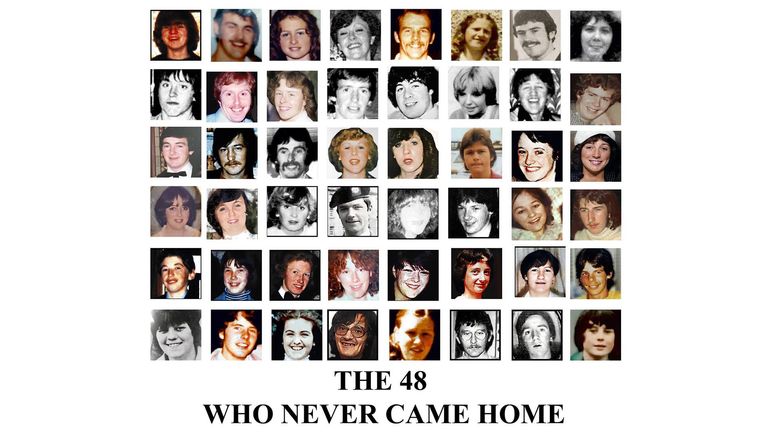
On 14 February 1981, a fire broke out at the Stardust Nightclub in Artane, Dublin. Forty-eight young people died and more than 200 were injured. It remains one of Ireland’s worst peacetime disasters. The case is a powerful example of how confirmation bias can shape an investigation and lead to misleading or incomplete conclusions.
In the immediate aftermath, investigators advanced a primary hypothesis that the fire had been caused by arson and deliberately started by one of the guests. Once this explanation took hold, it strongly influenced evidence gathering and interpretation. Witness statements, physical traces, and fire patterns were viewed through the lens of intentional ignition rather than accidental or systemic causes. Several features of the nightclub raised serious safety concerns: highly flammable furnishings and décor, inadequate fire safety measures, and issues relating to emergency exits. However, the arson hypothesis dominated. The conclusion from the original tribunal of inquiry in the early 1980s was that the blaze had been “probably” started deliberately. Many of the families refused to accept this conclusion and campaigned for a new inquiry.
In the 2000s and 2010s, independent fire experts reviewed the original tribunal material. They raised concerns about the evidential basis for the arson conclusion. They pointed to three factors that undermined the original conclusion.
Limitations in early 1980s fire investigation techniques, which relied heavily on visual interpretation of burn patterns. Modern fire science has since shown that many indicators once thought to signal accelerants or deliberate ignition (e.g., certain floor burn patterns) can also arise in accidental fires involving synthetic furnishings.
– Lack of physical evidence of accelerants. There was no conclusive forensic proof that flammable liquids had been used.
– Uncertainty about point of origin. Competing analyses suggested the fire could have originated in areas where electrical wiring and decorative materials were present, rather than from a deliberately ignited source.
Follow-up work highlighted several other factors consistent with a non-deliberate fire.
– Highly flammable interior materials. The club contained polyurethane foam seating and decorative fabrics known to ignite rapidly and produce toxic smoke.
– Electrical installations. Questions were raised about possible electrical faults in the area identified as the likely starting point for the fire.
– Rapid fire spread, consistent with flashover. Modern fire modelling suggested that once ignition occurred, the flammable material in the premises could account for the speed and intensity of the blaze without requiring deliberate acceleration.
A new inquest process allowed for updated expert testimony and a reconsideration of earlier assumptions. Modern fire science, combined with re-evaluation of witness accounts and physical evidence, led to a different conclusion from the original tribunal.The jury rejected the arson theory and found that the fire was not deliberately started, instead returning verdicts consistent with unlawful killing linked to fire safety failings.