
The Weekly Reflektion 08/2026
Our mental health is continually being challenged by the stress in our everyday lives. The news we see and hear is dominated by theheadlines and it is often difficult to assess what is really importantand why. Our brains are perhaps being trained to avoid reading in depth, to be satisfied with the headlines. This can be a problem when we are following complex procedures in our operation.
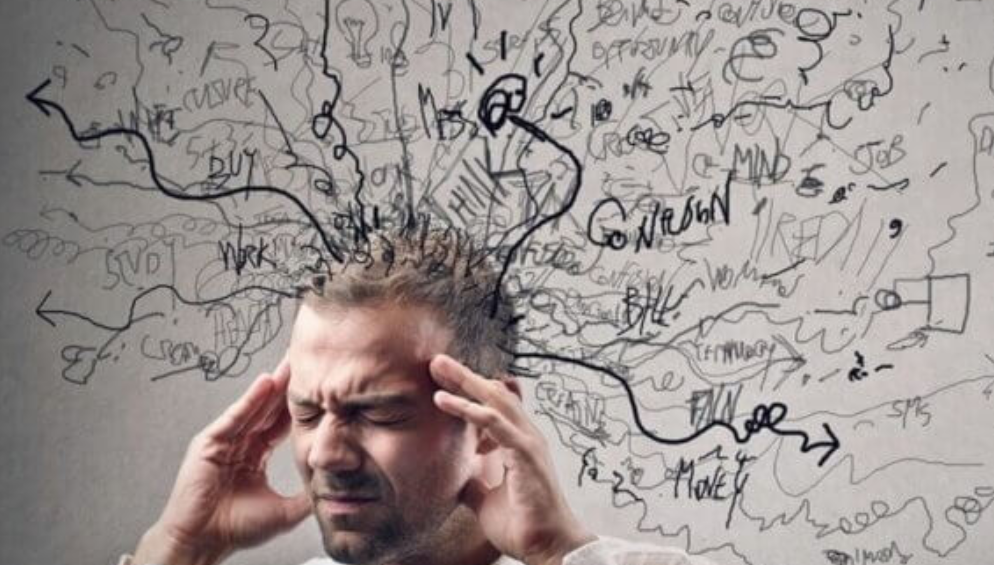
How are you taking care of your mental health?
Mental health is increasingly cited as a contributing factor in many tragic incidents in modern society. While the causes are complex, one possible influence deserves attention: the way we consume news.
Rolf Dobelli once described human beings as “cavemen in suits and dresses.” The image is provocative, but arguably pretty accurate. Our brains evolved in small hunter-gatherer groups of 25 to 100 people, in environments where both food and information were scarce. Today, we live in an opposite world, one of abundance and where food and information are plentiful. The human brain, however, has not evolved at anywhere near the same pace as technology so we are struggling to keep up
Modern news is designed for speed and emotional impact. It delivers headlines, brief updates, and fragments of context, easily consumed and quickly replaced by the next story. Unlike books or in-depth analysis, which require sustained concentration and critical thinking, news can be absorbed in endless quantities with little cognitive effort. Over time, this habit may erode our ability to engage deeply with complex issues.
More importantly, it can distort our perception of risk. News organizations naturally prioritize what is dramatic, unusual, and emotionally compelling: terrorist attacks, aviation disasters, financial shocks, or sudden political crises. These events matter, but they are statistically rare, although one may find that hard to believe today Meanwhile, slower-moving and systemic risks, such as chronic stress, mental health decline, under-resourced healthcare systems, antibiotic resistance, or long-term fiscal instability receive less sustained attention.
This imbalance affects how we judge the world. Behavioural science refers to this as availability bias: we assess the likelihood of events based on how easily examples come to mind. When rare but dramatic events dominate headlines, they become mentally “available,” and we tend to overestimate their probability.
This may also lead to consequences for mental health. Continuous exposure to alarming or emotionally charged news can keep the brain in a low-level state of vigilance. Our stress response evolved for immediate, physical threats and not a steady stream of global crises. When the flow of negative information never pauses, stress can become chronic.
The implications extend beyond personal well-being. In operational environments, oil and gas, aviation, medicine, engineering, attention to detail is critical. Procedures are rarely dramatic; they are methodical and precise. If we are conditioning ourselves to skim rather than study, to react rather than reflect, we may be undermining the cognitive discipline required to prevent failure. If we are indeed “cavemen in suits,” then we must recognize our cognitive limits. In a world saturated with information, discernment and discipline are not optional, they are essential.
The issue is not that we should avoid news entirely. An informed society depends on access to information. The question is whether we are consuming it wisely. Perhaps we should prioritize depth over volume, context over immediacy, and analysis over reaction.