
The Weekly Reflektion 05/2026
Sometimes things get broken and need to be repaired. When the commercial consequences are high there is pressure to carry out the repair quickly. What a relief when the operation can be started up again. Unfortunately, in some cases monitoring the repair is not considered and inspection routines are not carried out, resulting in tragedy.
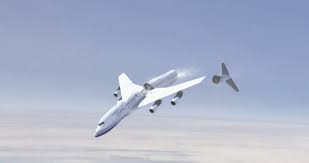
Do you monitor your repairs?
China Airlines Flight 611 was a passenger flight from Chiang Kai-shek International Airport (now Taoyuan International Airport) in Taiwan, to Hong Kong International Airport in Hong Kong. On 25 May 2002, the aircraft, a Boeing 747-209B, disintegrated midair and crashed into the Taiwan Strait, 43 km northeast of the Penghu Islands. All 225 people on board were killed.
In 1982, the aircraft involved suffered a tail strike that damaged the fuselage. Instead of replacing the damaged section as was normal, a repair patch was installed. During the investigation of the 2002 crash, it was discovered that the repair patch was incorrectly sizedand poorly fitted. The aircraft continued to fly safely for years after the first incident, however microscopic cracks slowly formed at the edges of the repair. With every flight, those cracks grew until the structure could no longer contain cabin pressure, leading to an explosive mid-air breakup. The reason for the growth of the cracks was metal fatigue. Commercial aircraft are pressurized thousands of times during their service life. Each pressurization cycle causes the fuselage to expand and contract slightly. While aircraft are designed to withstand this, stress naturally concentrates around joints, rivet holes, and critically around repair sites. If repairs are not performed exactly to manufacturer specifications, these areas become prime locations for stress concentration and propagation of fatigue cracks.
Prevention of this type of fatigue process starts with strict adherence to approved repair procedures that was not done on this aircraft. Aircraft manufacturers design repairs with precise dimensions, materials, and fastener patterns for a reason. Any deviation, even one that seems minor, can change how stress flows through the airframe. Maintenance documentation should be complete, accurate, and preserved for the entire life of the aircraft so future inspectors know exactly what was done. In this case the documentation was good, and this made the investigation more efficient. The use ofadvanced inspection techniques is also a key factor. Aging aircraft require more frequent and deeper structural inspections using non-destructive testing methods such as ultrasonic and eddy-current testing. Specific attention needs to be drawn to any repairs and inspection routines should include repair sites and other vulnerable areas. Regulators and airlines must treat aging-aircraft programs not as paperwork exercises, but as frontline safety defenses.
In the offshore petroleum industry in Norway, many of the installations are ‘aged’ and many of these have been repaired on numerous occasions. Some of the repairs have arisen from failures leading to loss of containment, some as the result of inspections that have discovered deficiencies before any failure. Any repair should include a review of any additional inspections required for the repair site.
The subject of our reflektion in week five of 2021 was the narcotic effects of hydrocarbon. The example used was a hydrocarbon leak on Brent Bravo in the UK sector in September 2003. The leak was from an incorrectly installed pipe patch and led to the death of two technicians that were assigned to repair the patch. The inspection routines on the patch repair were also found to be deficient.
Repairs to equipment and systems on an offshore installation may be inevitable due to the aging and degeneration processes that these are exposed to. Failure of these repairs does not have to be inevitable if you do the job correctly and carryout proper inspections.