
The Weekly Reflektion 52/2025
As we all prepare for Christmas, we would do well to think about the many people that have had their lives devastated by forces outside their control, during the festive season. These forces may be natural or manmade and often are a combination of mother natures’ powers and human failures. The investigations often lead to identification of measures that had they been in place, would have prevented the disaster or reduced the consequences. This is the essence of learning, and this is the main purpose of Reflekt. We hope that by making you aware of the many disasters that have occurred, you will reflect over how you can make your operation safer and protect the people in your organisation from harm. We hope you will be able to implement measures so that the disaster does not occur at any time, not just Christmas.
Merry Christmas to all our readers. Keep on learning and keep that Major Accident at bay.
Are you prepared for natural disasters?
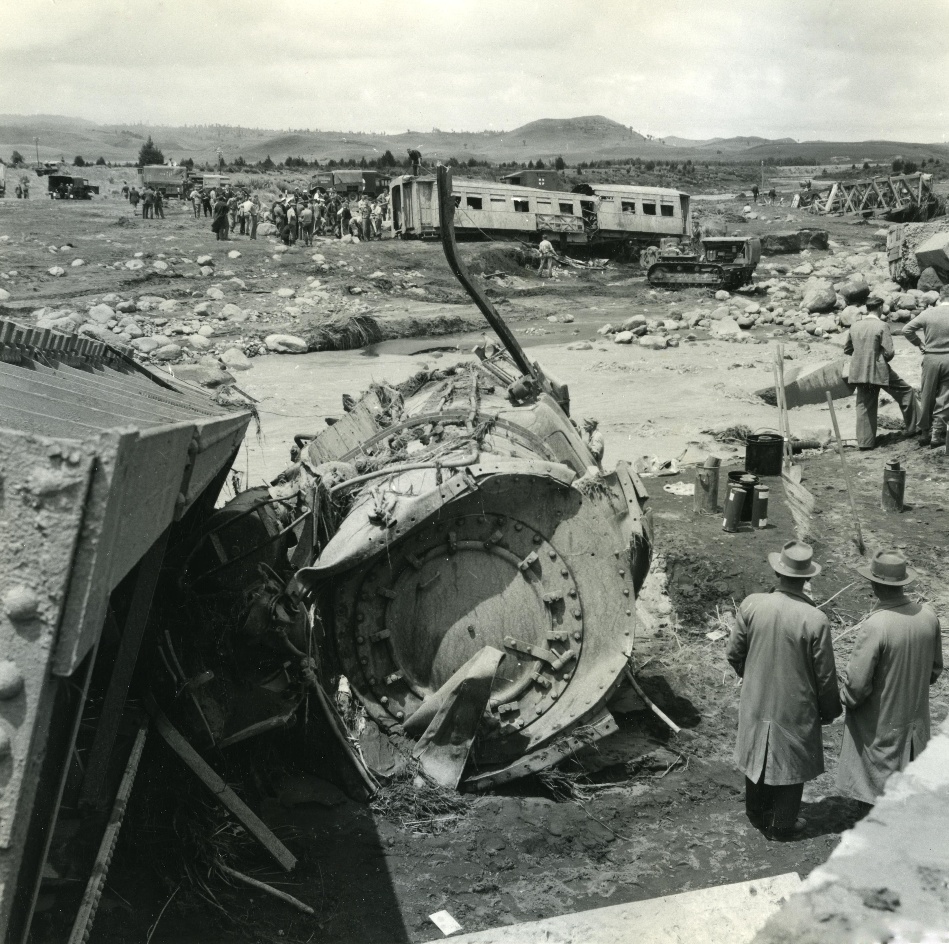
‘The Tangiwai railway disaster occurred on Christmas Eve 1953,near Tangiwai, on New Zealand’s Northern Island. It remains the worst rail disaster in New Zealand’s history, claiming 151 lives. The overnight express train travelling from Wellington to Auckland attempted to cross a bridge over the Whangaehu River shortly before 22:30. Unbeknown to railway staff and passengers, a natural dam holding Mount Ruapehu’s crater lake had collapsed minutes earlier. This released a powerful lahar, a fast-moving volcanic mudflow composed of water, ash, rocks, and debris, down the Whangaehu River. The lahar struck the rail bridge at Tangiwai, weakening and destroying one of its supporting piers. When the train reached the bridge moments later, the structure failed. The locomotive and the first six carriages plunged into the flooded river, where many were smashed apart or swept downstream. Some carriages were carried many kilometres away, and 20 victims were never recovered.
Rescue efforts began immediately and continued through Christmas Day. Local residents, police, railway workers, and military personnel worked in dangerous conditions to save survivors and recover bodies. Acts of bravery were widely recognised, as several individuals risked their lives to help others. The disaster deeply shocked the nation, especially as many passengers were families travelling home for Christmas.
A subsequent inquiry concluded that the disaster was caused by natural forces rather than human failures. At the time, there was no warning system in place to detect lahars, and the train crew had no indication that the bridge had been damaged.
The Tangiwai disaster led to important safety and risk-management learnings. Most significantly, it highlighted the need to consider natural hazards, such as volcanic activity, in infrastructure planning and operation. As a result, lahar warning systems were later installed on the Whangaehu River to detect sudden water surges and alert rail controllers in time to stop trains. The event also reinforced the importance of real-time monitoring, emergency preparedness, and coordination between geological scientists and transport authorities.
Today, Tangiwai is remembered not only as a tragedy, but as a turning point that improved rail safety and hazard awareness in New Zealand. The disaster remains a powerful reminder that understanding and preparing for natural risks is essential to protecting lives.